





A cutting board priced close to $60 is selling surprisingly well on Amazon US. According to ASINsight data, some leading titanium cutting boards are selling 6,000 to 10,000 units per month, with some products exceeding 30,000 units. More interestingly, it is not just one product performing well. Titanium cutting boards from different brands and price ranges are all gaining traction.
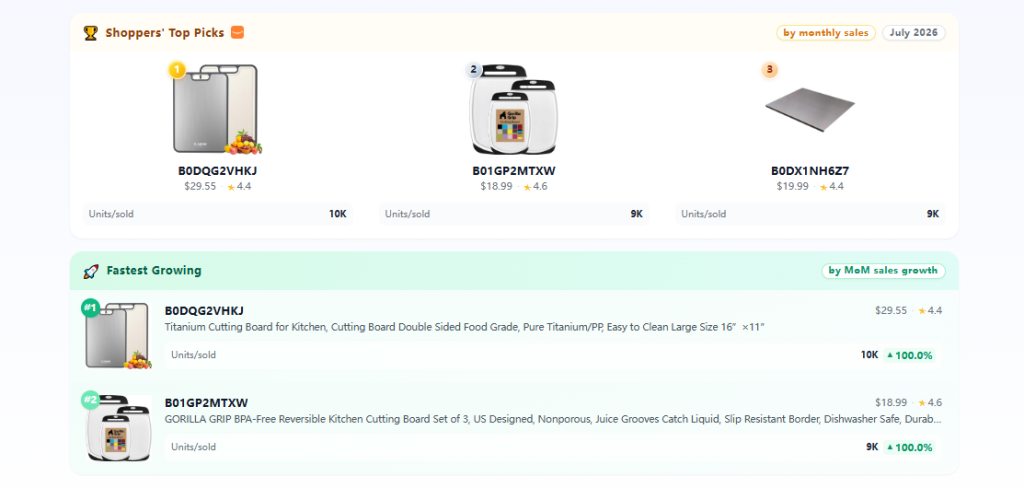
For sellers, the real question is not how much one cutting board sells. It is why consumers are willing to spend nearly $60 on a cutting board—and whether the same demand can create opportunities in other products.
Why Are Consumers Paying Nearly $60 for a Cutting Board?
Cutting boards are nothing new. Plastic, wood, and bamboo products have dominated the category for years. For a $60 cutting board to stand out, consumers need a clear reason to think, “This is different.”
Titanium cutting boards are not selling the material itself. They are selling the experience. One-piece construction makes them easier to clean, dual-sided designs can separate different foods, juice grooves help keep liquid off the countertop, and some products can simply go into the dishwasher.
None of these features are really saying, “I am made of titanium.” They are saying, “I make your kitchen routine easier.”
Consumers are not necessarily paying for titanium itself. They are paying for the problems it can help solve.
One feature alone may not justify a $60 price tag. But when durability, easy cleaning, food separation, and reduced reliance on plastic are combined, the premium becomes easier for consumers to understand.
Still, a higher selling price does not automatically mean higher profits.
Marketplace fees, FBA fulfillment costs, titanium processing, shipping, advertising, and potential returns can quickly reduce the margin. For premium products, sellers need to calculate not just how much they can sell, but how much they can actually keep.
Titanium Cutting Boards Reflect Changing Kitchen Preferences
The growing interest in titanium cutting boards is not simply about a new material. Some U.S. consumers are changing what they look for in kitchen products.
Price, size, appearance, and durability still matter. But consumers are also paying more attention to materials, ease of cleaning, and how convenient a product is to use.
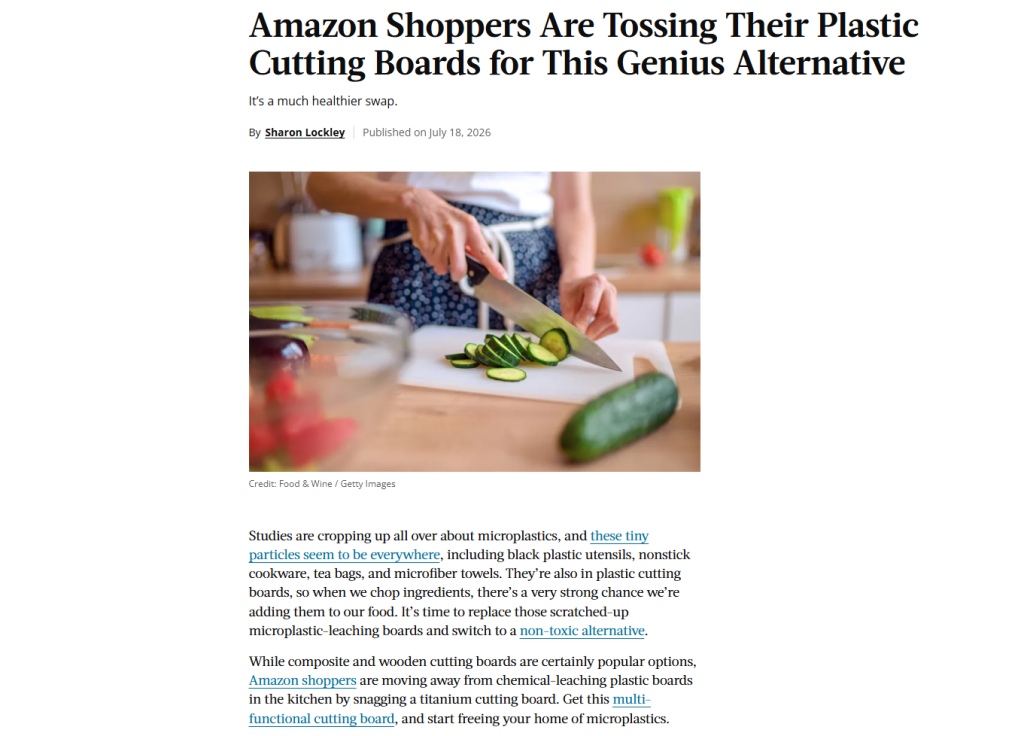
Food & Wine featured titanium cutting boards on Amazon in July, placing them within the broader trend of reducing plastic use in the kitchen. The article highlighted how consumers are considering wood, bamboo, titanium, and other materials as alternatives to older plastic cutting boards covered in knife marks.
This does not mean plastic cutting boards are disappearing. Rather, the definition of a “good” cutting board is becoming broader.
Titanium is only one example. Bamboo, wood fiber, and stainless steel products are also being reconsidered by consumers.
The bigger opportunity for sellers is not figuring out which material will win. It is recognizing that consumers may be willing to pay more for products that are easier to clean, more durable, and better suited to their lifestyles.
When the way consumers evaluate a mature product category changes, new opportunities can appear.
One Bestseller Does Not Prove a Trend
A single successful product is not enough to prove that an entire category is taking off.
When researching an emerging product, sellers should first ask whether there is only one bestseller or whether multiple products are growing together.
ASINsight is currently tracking more than 140 related products, with monthly sales ranging from several thousand units to more than 10,000 units. Some products have even reached around 30,000 monthly sales.
Different brands and price points are attracting buyers, which suggests that demand is extending beyond a single product.
This is an important point when researching Amazon bestsellers. Do not just look at how many units the No. 1 product sells. Look at whether the second, third, and other products are also gaining traction.
If only one product suddenly takes off, the result could be driven by its brand, reviews, or marketing strategy. If multiple products are performing well, the underlying demand deserves much closer attention.
There is another detail sellers may overlook when conducting cross-market research: Amazon search results can vary depending on the location and browsing environment. Using IPs from different regions can help sellers examine a market from multiple perspectives. Novproxy provides residential IPs covering the U.S. and other countries, which can support market research and public data collection.
The basic question is simple: Is the market actually growing, or are you just looking at an unusual bestseller?
The Opportunity in Premium Products Is Not Higher Prices, but Clearer Value
Titanium cutting boards reveal an interesting shift: consumers are willing to spend several times more on a product that was traditionally inexpensive.
That suggests kitchen products do not always have to compete on price.
But sellers cannot simply change the material and raise the price. The key is whether consumers can understand why the product is worth more.
For example, changing the color of a standard cutting board does not give consumers much reason to pay significantly more. But if a product can improve cleaning, durability, food separation, or storage, the higher price becomes easier to justify.
Instead of looking for “expensive products,” sellers should look for products that give consumers multiple reasons to buy.
The lesson from titanium cutting boards is simple: a premium product does not necessarily need complicated features. It needs to make the value of the higher price easy to understand.
The Real Opportunity Is Not Another Silver Titanium Cutting Board
When sellers see a titanium cutting board selling well, the most obvious reaction is to copy it.
But the basic category is already becoming competitive. Leading products have strong sales and large numbers of reviews. A new seller offering another similar silver titanium cutting board can quickly end up competing on price, advertising, and reviews.
A better approach is to look at what leading products have not solved.
Small-kitchen users may struggle with large cutting boards that take up too much space. Outdoor users may find them too heavy to carry. Families with young children may care more about food separation and odors.
These complaints can point toward new product opportunities.
For camping users, the product does not simply need to be a cutting board. It needs to be lightweight, portable, and easy to store. A smaller design with a hanging loop could shift the product from the kitchen to outdoor use.
For apartment kitchens, countertop space is limited. A cutting board that combines cutting, draining, and storage could turn the material into part of a broader space-saving solution.
For families preparing baby food, a dedicated cutting board designed around easy cleaning and food separation could target a much more specific audience.
These are only examples. The bigger lesson is:
Do not focus on what the bestseller looks like. Focus on who the bestseller is not serving yet.

Titanium Cutting Boards Have Drawbacks Too
Titanium cutting boards are not without problems. Recent product testing has pointed out that titanium is relatively hard and can make knives dull more quickly. Serious Eats found in practical testing that titanium caused more blade wear than wood and plastic cutting boards.
For sellers, this kind of weakness can actually be valuable information.
Consumers may like titanium for its durability and easy cleaning while disliking its impact on their knives. That tension itself could point toward future product improvements.
A bestseller tells you what consumers are willing to buy. Reviews and product testing can tell you why some consumers are still dissatisfied.
Intellectual property is another issue sellers should consider before entering the category.
Products with distinctive features such as one-piece construction and integrated juice grooves may have relevant intellectual property protections. Before developing a similar product, sellers should search the U.S. Patent and Trademark Office database and make sure their design does not infringe existing rights.
After finding a bestseller, the first step should not be asking a factory for a quote. It should be determining whether the product can be developed safely.
What Can Sellers Learn From the Titanium Cutting Board Trend?
The titanium cutting board market offers a useful framework for researching opportunities in other categories.
First, look at whether demand is expanding. Are multiple brands and price points generating sales beyond the leading product? Several products growing together are more convincing than one sudden bestseller.
Next, find out why consumers are buying. Do not rely only on the product page. Read reviews, questions, and independent product tests. Product pages tell you what sellers want consumers to know. Reviews and testing often reveal what buyers actually care about.
Finally, look for the customers existing products are missing. The more mature a market becomes, the harder direct imitation gets. But underserved customer groups and use cases can still create room for new products.
Once these three questions have clear answers, sellers can move on to suppliers, costs, and product development. That is usually a more reliable approach than jumping into a category simply because one product is selling well.
And this method is not limited to titanium cutting boards. The next opportunity may come from an entirely different category.
Conclusion
The rise of titanium cutting boards does not mean U.S. consumers are about to replace all their plastic and wooden cutting boards with titanium.
What it does show is that when consumers start paying more attention to materials, cleaning, durability, and lifestyle needs, even mature product categories can create new growth opportunities.
For sellers, the better strategy is not to blindly copy a $59.9 bestseller. Instead, study why it works, what consumers still dislike, and whether those unmet needs can be developed into new use cases.
Best-selling products can be copied. The consumer demand behind them is what sellers should learn to spot early.