





In June 2026, a coconut oil squeeze ball emerged as a dark horse in the U.S. toy market and gained rapid popularity overseas. Priced at $10.41 (approximately 70.55 RMB) in the United States, the product recorded 11,400 orders within over 30 days, with total sales exceeding $109,100 (about 739,400 RMB), topping the U.S. toy category sales chart.
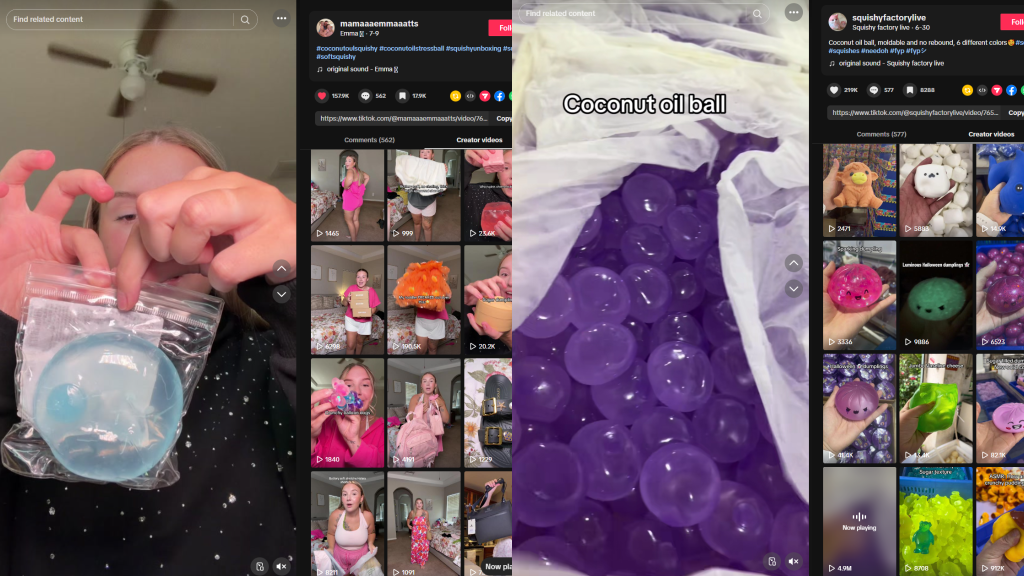
Few people know that its wholesale cost on domestic supply channels is merely 1 RMB.
A 70-fold price gap is disruptive in the commodity industry. While most similar products compete by cutting profit margins, this coconut oil squeeze ball avoids low-price competition and achieves high premium profits. It adopts no high-tech or new materials, only ordinary TPR plastic filled with coconut oil gel, yet boasts an astonishing price surge.
The answer is simple: consumers pay not for raw materials, but for emotional value.
Buying a Ball Means Buying a Ten-Minute Mental Break
Modern consumption has shifted from practical demand to emotional satisfaction. Industry data shows that the global stress-relief toy market maintains steady growth, reaching $6.26 billion in 2026. Slow-rebound and interactive healing gadgets see an annual growth rate of around 15%. The core consumers of such products are not children, but young people aged 18 to 35.
Different from traditional entertaining toys, these stress-relief gadgets focus on healing. Faced with tremendous pressure from life, work, and social interactions, young people need low-cost, accessible emotional outlets, which squeeze balls perfectly provide.
This coconut oil squeeze ball stands out not for technological upgrades, but for delivering a complete immersive sensory healing experience. Visually, the highly transparent TPR material with coconut oil gel presents a jade-like transparent texture with a soothing appearance suitable for display. Tactilely, the special gel filling and slow-rebound craftsmanship deliver soft and relaxing touching feelings. Audibly, it makes a gentle squelching sound when squeezed, matching classic ASMR rhythms to soothe moods.
The superposition of three senses turns it from an ordinary plastic toy into a portable emotional regulator. For overseas consumers, the $10 price is equivalent to the cost of a cup of coffee.
The past competition centered on lower prices, while the current competition focuses on better emotional comfort.

Confidence of Chinese Manufacturing: Polishing Subtle User Experiences
Excellent experiential design relies heavily on mature manufacturing support.
Many wonder how a product with premium visual, tactile, and auditory experiences can cost only 1 RMB. This is the core advantage of China’s commodity supply chain. With accessible TPR raw materials and mature injection molding technology, industrial clusters enable rapid allocation of molds, materials, and assembly resources, greatly cutting basic costs and enabling mass production at low prices.
However, manufacturing a product is entirely different from creating one worthy of a 70-fold premium.
Ordinary low-cost squeeze balls are widely available, yet most suffer from sticky surfaces, hard texture, and a cheap feel, losing user appeal after several uses. In contrast, the coconut oil squeeze ball achieves targeted upgrades with high-transparency, non-sticky custom TPR material and natural coconut oil gel filling, featuring slower rebound and a more comfortable touch.
Furthermore, a Halloween-themed bun squeeze ball launched by the same store in late June has gained over 40,000 orders and surpassed $4.18 million in sales. The same supply chain achieves repeated explosive sales merely through festive styling updates.

Production capacity sets the floor of product costs, while experience-oriented detailed innovations set the ceiling of product premiums.
The Secret of Viral Success: Translating Tactile Sensations Into Universal Appeal
High-quality products and mature supply chains do not guarantee viral popularity.
This squeeze ball goes viral because it converts tangible soothing tactile experiences into shareable positive emotions. It requires no complex introduction or professional shooting. A simple squeezing movement fully showcases product features. Mass user-generated content on social media drives its popularity, relying on public experience resonance rather than paid advertising.
Cross-market aesthetic adaptation is essential for sustained popularity. Overseas markets prefer fun, visually striking styles, while Japanese and South Korean markets favor delicate, miniature, and healing simulation designs.
Continuous insight into global aesthetic and consumption trends requires stable access to overseas market updates.
Many industry teams leverage Novproxy’s stable network services to track real-time social media trends worldwide and seize emerging product opportunities.
The core demand for stress relief remains universal, while product presentations are tailored to local market preferences.
A Balanced View on Viral Products: High Premiums Stem From Refined Polishing
The gadget industry never lacks viral products, yet most are short-lived. Fast iteration and widespread homogenization lead to fierce low-price competition once a product gains popularity.
Sustained market competitiveness depends on continuous, detailed optimization. Stable tactile feeling, consistent material transparency, and uniform batch experience are key factors retaining long-term users.
Short-term popularity relies on trending products, while long-term sales growth depends on sustained experience optimization and in-depth user demand understanding. Market rewards always go to teams committed to polishing product experiences and details.
Conclusion

A tiny squeeze ball achieves a 70-fold price increase from a domestic factory to overseas markets. There is no commercial mystery, but clear market logic. Mature Chinese manufacturing solves production and cost problems, while emotional value premium comes from insight into young people’s emotional needs, refined healing experience polishing, and the transformation of abstract stress relief into tangible tactile, visual, and auditory experiences.
A 1-yuan material cost is negligible, yet the product experience that delivers ten minutes of relaxation for $70 will always have stable market demand.