





An interesting trend has emerged in the overseas apparel market. While many viral fast-fashion styles fade quickly, plus-size cooling vacation dresses maintain steady sales, becoming a rare category with sustainable growth.
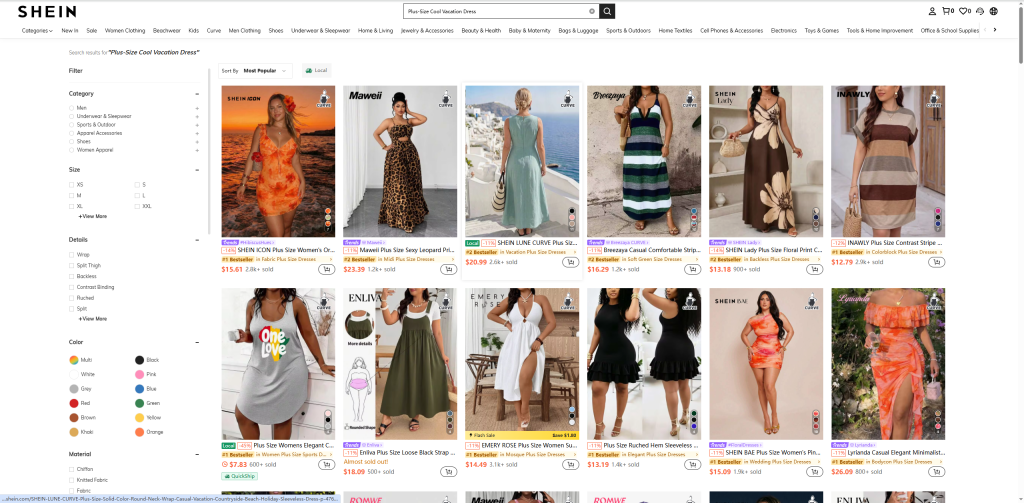
Accordingly, leading platforms have launched targeted ODM recruitment for the plus-size track. This covers not only summer cooling styles but also high-process designs—mesh, sequin, corset dresses—along with autumn and winter products. This move targets long-term industry changes rather than temporary seasonal trends.
Plus-Size Is No Longer a Niche Overseas Market
Many foreign trade practitioners once regarded plus-size clothing as a secondary category with limited market potential and little room for in-depth development. However, shifts in overseas consumer demographics have overturned this outdated perception.
Research shows that 41.3% of adult women in the U.S. wear plus-size apparel, forming the core consumer group in the apparel market. The global plus-size women’s clothing market is projected to exceed $342.81 billion by 2026, making it a true billion-dollar mainstream market.

Nevertheless, market supply lags far behind booming demand. Most plus-size products are merely scaled-up standard sizes, without structural adjustments for waist, hip and arm features. Poor tailoring causes tightness, bulking and squeezing, which are common consumer complaints. This supply-demand gap presents a huge market opportunity.
Rising Temperatures Make Cooling Wear a Summer Necessity
Consumer demographics define market scale, while rising temperatures further drive the popularity of cooling apparel.
Summers are getting hotter year by year. Consumers prioritize comfort over appearance, focusing on breathable, sweat-proof and non-sticky wear. Plus-size users suffer more from heat discomfort. Their body types trap heat and sweat easily, causing sticky fabric and damp backs during daily wear.
Overseas user reviews frequently mention “non-sticky fabric” and “all-day dryness” as core advantages. Comfort has become the key purchasing factor. Current cooling fabrics and patterns are mostly designed for standard body types. The lack of functional solutions for plus-size groups creates clear differentiated opportunities for manufacturers. Whoever solves these fit and comfort issues will secure a clear competitive edge.

Aesthetic Transformation Drives Inclusive Wear Demand
Beyond climate shifts, changing fashion aesthetics have opened up new possibilities for plus-size styling.
Previously, plus-size buyers focused mainly on covering body flaws with conservative outfits. As body inclusiveness gains mainstream popularity, aesthetic values have become diverse and confident. Modern consumers no longer hide their figures, preferring fresh, stylish and atmospheric outfits that prioritize comfort and self-expression.
This trend boosts the sales of cooling dresses that combine comfort and aesthetics. Inclusive cutting and functional fabrics perfectly match current overseas dressing preferences and gain wide market recognition.
Vacation Scenarios Become a High-Profit Breakthrough
Vacation dresses achieve stronger growth and premium capability due to high-value segmented scenarios.
Daily basic dresses face fierce competition and transparent profits with few differentiation opportunities. In contrast, vacation consumers are willing to pay more for better texture, comfort and photogenic styles. Suitable for outings, beaches, afternoon teas and casual gatherings, one dress fits multiple scenarios with high practicality.

High-process styles with mesh, sequin and corset designs perform exceptionally well in vacation markets. Their unique appearance avoids homogeneous competition and improves profit margins. This explains why leading platforms actively expand such high-value categories.
Platform ODM Recruitment Signals Track Upgrading
The latest recruitment policy clearly defines future industry rules.
Platforms are phasing out low-cost mass production and simple replication. They now prioritize suppliers with independent design, pattern optimization and advanced craftsmanship. The all-year layout covering summer cooling wear and autumn/winter coats and fur confirms this is a long-term stable track rather than a seasonal fad. Pure OEM manufacturers without R&D capabilities will be gradually eliminated, while teams solving plus-size wearing pain points and mastering functional fabric technology will become highly competitive resources.
For new entrants, tracking overseas trends and competitor dynamics is essential. A stable network environment improves information efficiency. Novproxy’s residential IP service provides professional solutions for such market research needs.
Three Practical Directions for Business Growth
Blind stockpiling is unnecessary. Three core strategies help enterprises stabilize market positions.

Fit serves as market entry ticket: Plus-size design is not simply size enlargement. Core R&D focuses on optimizing body tolerance and adjusting bust, waist and arm cutting to solve tightness and bulking issues, making accurate fitting the core competitiveness.
Fabric builds irreplicable barriers: Professional cooling, breathable, non-sticky and quick-drying fabrics meet summer functional needs. High-quality functional materials create obvious product differentiation through improved wearing experience.
Balanced product structure ensures profits: Basic cooling styles maintain sales volume and cash flow, while high-design and high-process styles increase profit margins. This dual-layout avoids low-price competition and builds differentiated advantages.
Conclusion
The sustained popularity of plus-size cooling vacation dresses is not accidental traffic luck, but the combined result of demographic changes, rising temperatures, aesthetic upgrading and scenario dividends. This single-product boom marks the transformation of the billion-dollar plus-size track from basic demand supplementation to functional, fashionable and refined development.
Future industry competition no longer relies on low prices and production capacity, but on R&D, details and user experience. Rather than chasing short-term viral styles, focus on pattern optimization, fabric upgrading and craftsmanship. Meeting real consumer demands is the most stable long-term strategy.