





Russia’s tea market is showing an interesting shift: overall consumption is under pressure, but some specialty teas and new flavors are gaining popularity.
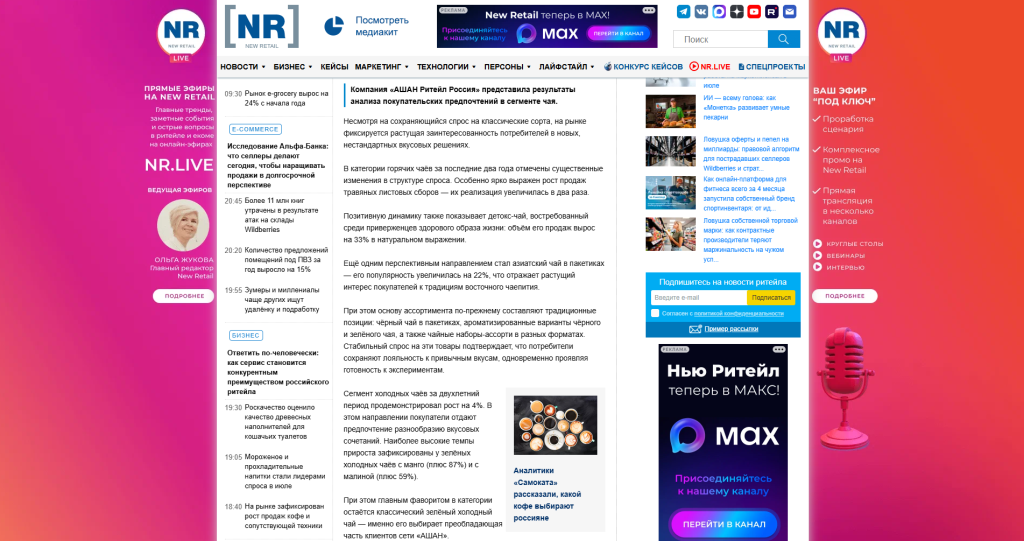
In the first five months of 2026, sales of black tea, green tea, and herbal tea all declined in Russia, while flavored black tea and some specialty teas continued to grow. The latest Auchan data shows that the iced tea market grew by just 4%, but mango green tea and raspberry green tea sales jumped 87% and 59%, respectively.
These figures suggest that Russian consumers are not simply drinking less tea. Instead, their choices are becoming more diverse within a mature tea market. For exporters, the key question is not just whether Russia’s tea market is growing, but which specific tea types, flavors, and products are gaining demand.
Russia’s Tea Market Is Splitting, but Traditional Tea Remains Strong
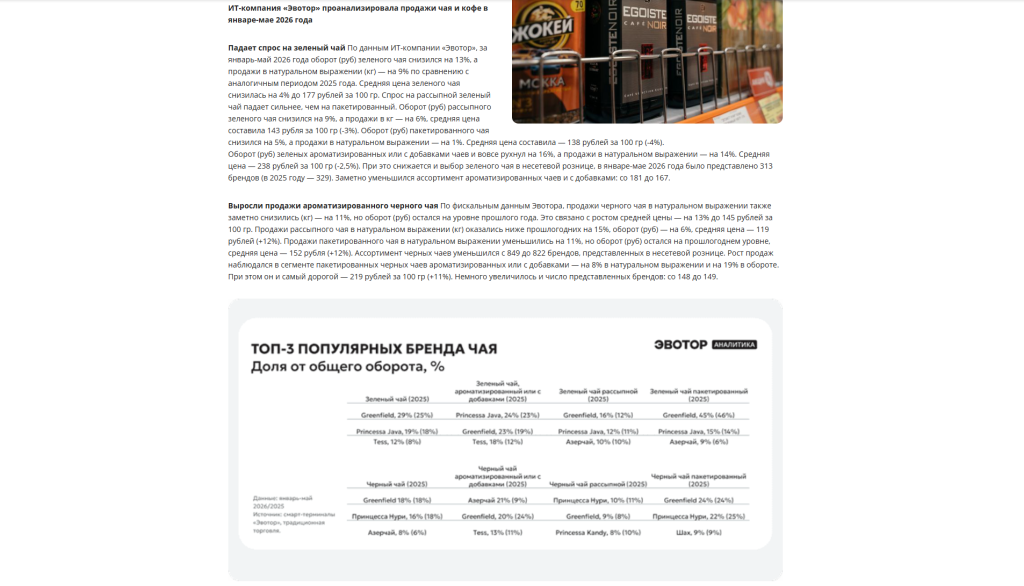
The latest 2026 sales data shows that Russia’s traditional tea market is facing some pressure. Evotor analyzed retail sales from January to May 2026 and found that black tea sales fell 11%, green tea declined 9%, and herbal tea dropped 10%. However, this does not mean consumers are abandoning tea altogether.
One interesting trend is the growing gap between different products. While traditional green tea sales declined 9%, flavored or specially blended black tea bags grew 8%, with sales revenue increasing 19%. The average price of this flavored black tea also reached 219 rubles per 100 grams, significantly higher than regular black tea.
This suggests that while demand for traditional products is weakening, teas with more distinctive flavors and characteristics can still attract consumers. For exporters, it may therefore be more useful to break the market down into specific categories rather than simply looking at overall tea sales.
New Flavors Are Becoming a Growth Opportunity
While Evotor’s data shows broader changes in the tea market, the latest data from Auchan offers a closer look at changing flavor preferences.
According to Auchan Retail Russia’s tea consumption analysis, the Russian iced tea market grew 4% over the past two years. That figure may not seem particularly impressive, but a closer look reveals a different story: mango green tea sales jumped 87%, while raspberry green tea increased 59%. Classic green tea, meanwhile, remained the most popular choice.
This combination is more interesting than the overall 4% growth in iced tea. If the category grows only 4% while specific flavors rise by nearly 60% or even 90%, it suggests that the strongest opportunities may be emerging within established categories rather than in the categories themselves.
Consumers still enjoy classic green tea, but they are also experimenting with fruit and berry flavors. For exporters, product innovation does not necessarily mean changing consumers’ existing tea habits. New flavors, formulations, packaging, or drinking occasions can also create opportunities.
Specialty Tea Shows New Growth Signals
Flavored tea and iced tea are not the only areas worth watching. Some specialty teas are also showing strong growth.
Evotor’s 2026 data shows that specialty teas such as oolong, pu-erh, and matcha recorded 57% sales growth. At the same time, the number of brands in this category fell from 21 to 19, suggesting that sales growth was not accompanied by an increase in the number of brands.
This does not mean specialty tea has become mainstream in Russia. However, it does offer an interesting signal: demand for some specialty teas is increasing while supply has not expanded at the same pace.
For exporters, this gap between demand and supply may be more valuable to investigate than a high growth rate alone. If consumers are showing greater interest in a specific category while the number of available products remains limited, it may deserve closer attention.
That said, a 57% growth rate should not be treated as an automatic entry signal. Oolong, pu-erh, and matcha appeal to different consumers and face different price and competitive conditions. Each product still needs to be evaluated separately.
How Can Exporters Find Opportunities in Russia’s Tea Market?
This market environment requires exporters to rethink how they look for opportunities.
If you only look at the overall Russian tea market, it is easy to conclude that demand is declining. But once the market is broken down, black tea, flavored black tea, green tea, iced tea, and specialty tea show very different performance.
That is why exporters can start with specific categories instead of trying to judge the entire tea market. For example, an 87% increase in mango green tea sales could lead to further research into mango green tea products in Russia. Likewise, the 57% growth in specialty tea could be broken down into pu-erh, oolong, and matcha.
The more specific the research target, the easier it becomes to identify actual market changes.
The next step is to look beyond sales numbers and examine products, prices, and competition. If a tea category is growing quickly, exporters can check which products are available on Russian e-commerce and retail platforms, where prices are concentrated, which brands appear most frequently, whether new products are entering the market, and what consumers repeatedly mention in their reviews.
These signals can help determine whether a growth figure reflects genuine consumer demand or simply a temporary market fluctuation.
A Three-Step Market Validation Method for Exporters
Once you identify a growing category, three steps can help determine whether it is worth pursuing.
Step 1: Track Prices and Product Supply
Do not simply record the current price of a product. Track changes in prices, the number of new products, and the brands entering the category.
If interest in a category continues to rise while more new products appear, it suggests that more sellers are paying attention to the market. But if a category shows strong growth without continued changes in product supply or market attention, exporters should be more cautious.
Step 2: Analyze What Consumers Really Care About
Product reviews can often reveal more than sales figures alone.
For tea, consumers may care about flavor intensity, aroma, convenience of tea bags, packaging, storage, sweetness, or how the product should be prepared. These comments can help exporters identify opportunities for product improvements.
For example, consumers buying fruit tea may not simply want “fruit flavor.” They may prefer a stronger aroma, less sweetness, or more convenient packaging.
Step 3: Keep Monitoring the Market
Tea consumption can be affected by seasons, new product launches, and promotions. A product that grows rapidly in the short term may not necessarily maintain that momentum.
After identifying an opportunity, exporters should continue tracking prices, product numbers, reviews, and new launches.
For exporters, the most valuable opportunities are rarely based on a single sudden growth figure. They are usually revealed when several market signals continue pointing in the same direction over time.
From “Popular Tea” to Specific Consumer Needs
The most important change in Russia’s tea market may not be which tea eventually replaces black or green tea.
The latest data shows that traditional tea remains an important part of the market, while flavored tea, specialty tea, and new flavors are gaining attention. Classic green tea remains popular, but flavors such as mango and raspberry are growing faster. At the same time, some specialty teas are seeing significant sales growth despite overall pressure on traditional tea.
For exporters, the more useful questions are: What flavors are consumers choosing? What product formats do they prefer? What price ranges are common? Which products are attracting more attention?
This is where market research becomes valuable. Industry data can help identify a direction, but looking at real products and consumer feedback in the Russian market is what helps determine whether a trend can become a genuine business opportunity.
For exporters, continuously monitoring products, prices, and consumer feedback in Russia is equally important. Russian e-commerce platforms such as Ozon and Wildberries can have regional access differences. NovProxy provides residential IP services that can help businesses access public web data more consistently for market research and competitor analysis.
Conclusion
Russia’s tea market is moving beyond simple competition between major categories and showing more fragmented consumer demand. Traditional black and green tea still have a strong base, while flavored tea, specialty tea, and new flavors are creating additional opportunities.
For exporters, opportunities may not come from a sudden breakout category. They may instead be hidden in a growing flavor, a new product format, or an unmet consumer need.
A mature market does not mean there are no opportunities. It means the opportunities are often hidden in smaller changes. For exporters, spotting growth is only the first step. Identifying the trend, validating it, and then deciding whether to enter is what matters in the long run.