





During major tournaments such as the World Cup and Super Bowl, many foreign trade sellers share the same mindset: tournament opportunities equal jerseys, flags and fan merchandise. Those with hands-on experience know this path grows tougher by the day. Identical products flood the market, prices keep sliding, advertising bids surge, and profit margins shrink drastically. Worse still lies copyright risk. Unauthorized use of team logos or athlete IP can lead to product delistings, or even legal disputes. Once the competition wraps up, piles of inventory remain unsold with few viable clearance channels.
Data Does Not Lie: Living Rooms and Refrigerators Are the True Battlefield
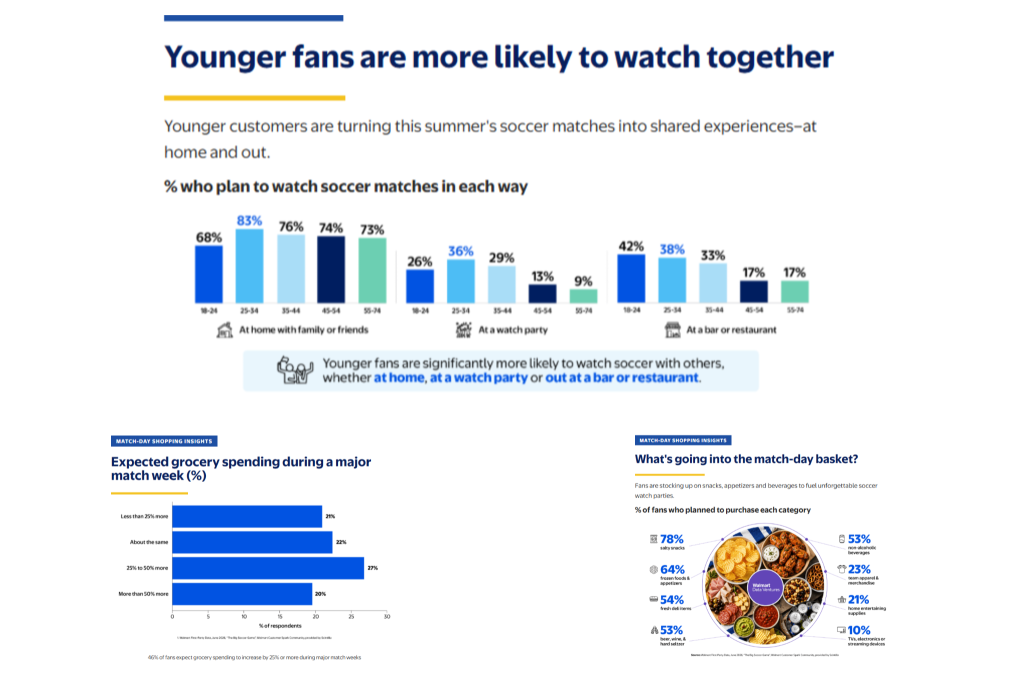
Walmart recently released a shopping habit survey covering 1,021 North American fans, outlining fan viewing patterns and pointing out a clear breakthrough for merchants. Nearly half of respondents stated their household grocery spending rises by at least 25% during key matchweeks. This is not fleeting emotional consumption, but steady orders placed online and in physical stores. Consumption scenarios are highly concentrated: 67% of fans watch games at home in groups of two to five. Gathering with friends in front of the TV is the most common way North American fans enjoy matches. These small social gatherings fuel demand for shareable, scenario-oriented goods.
The purchasing priority list speaks volumes. 78% of consumers pick savory snacks first, 64% opt for frozen appetizers, followed by ready-to-eat meals, alcoholic and non-alcoholic beverages. The picture is vivid: shoppers stock up fridges and coffee tables before kickoff, eating and chatting while watching the game. Every food category creates supporting demand: containers for snacks, plates for frozen and prepared food, ice buckets and cups for drinks. Food represents front-end consumption, while supporting utensils are the viable export niche worth tracking.
Another set of figures deserves attention. 90% of shoppers expect impulsive purchases during gathering runs; 59% favor familiar brands, and 61% are sensitive to discounts. Bundling goods into scenario-based sets with promotional incentives effectively drives conversions. Meanwhile, crowds of traveling fans boost sales of American condiments such as ranch dressing. Viral food trends online continuously reshape shopping lists. Flavor combinations and social media trends keep opening new category windows.
Why the “Living Room Economy” Outperforms Traditional Tournament Merchandise
Digging beneath surface data reveals two fundamentally distinct business models, a key reason many merchants struggle to turn a profit. Fan merchandise suffers from severe homogenization with transparent pricing. Few suppliers target watch-party goods, leaving ample room for differentiation. On copyrights: fan gear is tightly tied to team IP. Unlicensed logos or portraits trigger platform penalties. Living-room products serve general household scenarios without such compliance risks. In terms of sales cycles: fan merchandise relies fully on tournament schedules. Once top teams are eliminated, related goods lose appeal. For living-room items, tournaments act as traffic catalysts; they sell steadily for regular home gatherings year-round. Demand stability creates the biggest gap. Sales of fan goods swing wildly with team performance. Living-room products cater to a basic truth: people want food and drinks while watching sports, regardless of match outcomes.
When building tournament businesses, guessing which team will advance matters less than understanding genuine household demand inside North American living rooms.
Three Segments to Turn the Living Room Economy into Sellable Goods
Based on consumption scenarios and preferences uncovered in the survey, three non-food product lines merit strong attention.
Refrigerator Storage Supplies

After stocking groceries, sauces, and beverages, fans need storage, portioning, and cooling solutions. Food storage containers, sauce squeeze bottles, divided dip platters, home ice buckets, rapid-cool cups, and compact portable ice makers enjoy consistent daily usage, ideal as foundational store listings.
Living Room Party Goods
Designed for small in-home gatherings of 2–5 people, this category drives higher average order values. Multi-tier snack stands, coordinated tableware sets, general decorative items, stain-resistant home textiles, and sealed snack containers balance practicality and atmosphere. They align perfectly with impulsive buying behavior and perform well when sold as bundles.
Portable Game-Day Gear
Suited for viewers aged 25–44 attending watch parties outdoors. Portable coolers, leak-proof storage containers, outdoor picnic mats, and foldable seating work both indoors and outdoors, broadening sales coverage.
How North American Fans Consume Shapes: Product Selection & Operations
Understanding consumer psychology clarifies product and operational strategies. North American fans’ core demands can be summed up: low-effort, lightweight, and social. They avoid lengthy cooking and tedious cleanup on matchdays. Items that are ready-to-eat, simple to heat, easy to grab, and share perform best.
The industry often overestimates younger shoppers’ willingness to try new products. Survey data show only 56% of consumers aged 18–24 will test new goods due to tournament marketing. Shoppers aged 25–44 hold steady budgets and host home gatherings more frequently. Instead of pouring all resources into youth groups, prioritize middle-aged viewers with more reliable purchasing power.
How to translate these insights into tangible operations? Build offerings around the concept of a complete watch-party setup. Prioritize accessories for snacks, frozen meals, prepared food, and beverages. Integrate search terms such as “game night essentials” and “watch party supplies” into titles and descriptions. Main images and videos featuring groups enjoying snacks deliver stronger immersion than plain white-background product shots.
Bundle complementary items for higher conversions. Pair snack racks with dip trays, ice buckets with tumblers, tableware with tablecloths, plus decorative pieces to form full “game night kits.” Launch tiered discounts and limited-time promotions during tournaments to match buyers’ price sensitivity. Video content works well for outreach. Cover snack storage, home party styling, and trending food pairings. Focus on showcasing a comfortable viewing lifestyle instead of hard-selling tournament themes.
Revise inventory logic. Tournament demand fluctuates heavily based on match results. Forecasts from behind a desk are unreliable. Adopt small-batch, flexible restocking. Place initial stock before the tournament, then replenish quickly according to real-time trends and online buzz.

Several easily overlooked operational reminders: Focus on general watch-party scenarios. Avoid team logos, athlete imagery, or official tournament branding. Sustainable growth comes from leveraging trends without crossing compliance lines. Tournament sentiment fluctuates sharply, though home-use goods offer greater stability. Single SKUs are easily copied. Scenario-based bundles create harder-to-replicate competitive advantages.
Tournament success relies not only on product selection but also on market research capabilities and execution efficiency. A stable network infrastructure underpins all these tasks. Novproxy delivers clean, reliable native IP resources, helping merchants conduct market research, ad validation, and daily account management smoothly.
Conclusion
Opportunities created by major tournaments are not merely about selling fan merchandise. They satisfy a lifestyle: people want relaxed gatherings with friends, sharing food and drinks to enjoy hours of entertainment. The living room economy carries clear strengths: lower copyright risks, extended sales cycles, and sizable growth potential.
When building tournament-focused businesses, there is no need to speculate on the championship winner. More predictable growth lies within North America’s countless living rooms and refrigerators.