


When collecting data from websites, many people confuse web scraping and web crawling. Although both are related to obtaining web data, they serve different purposes, follow different processes, and fit different scenarios. Without understanding the difference between web scraping and web crawling at the beginning of a project, businesses may create overly complex solutions or fail to meet their data collection goals.
This article explains the key differences, use cases, workflows, and selection methods of web scraping and web crawling, helping you choose the right approach based on your data collection needs.
What Is Web Scraping?
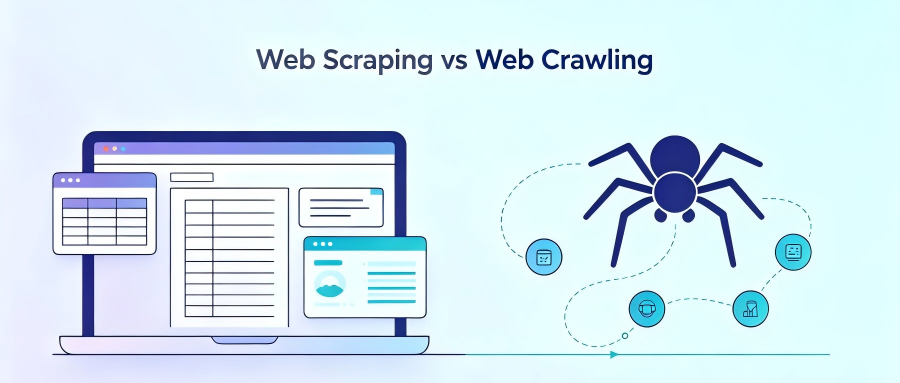
Web scraping refers to the process of extracting specific information from already identified web pages based on predefined rules. It does not focus on finding pages but on collecting useful data from existing pages.
For example, businesses often collect competitor prices, product details, and customer reviews for market analysis. After organizing this information into spreadsheets or databases, they can analyze market changes and product trends. This is a typical web scraping task because the target pages and required data fields are already clear.
How Does Web Scraping Work?
The web scraping process usually starts by identifying target pages, such as product detail pages. A program accesses the page, reads the HTML content, analyzes the page structure, locates specific fields such as prices, product names, and inventory, then extracts the required data and outputs structured results.
For product data collection, the program first accesses product pages, identifies key information, and stores the extracted data for further analysis, such as price comparison or market research. The entire process focuses on accurately collecting specific information from known web pages.
What Is Web Crawling?
Web crawling is a technology used to automatically discover and access web resources. The program responsible for web crawling is usually called a web crawler.
A web crawler starts from one or more entry URLs, analyzes links within pages, and follows those links to discover new pages. It continuously expands its coverage and focuses on finding more web resources rather than extracting specific data fields.
Search engines are one of the most common examples of web crawling applications. As the number of web pages continues to grow, search engines rely on crawlers to discover new pages and understand relationships between websites. Web crawling is also used for website structure analysis, content discovery, and web database creation.
How Does Web Crawling Work?
After setting entry URLs and crawling rules, a web crawler visits pages, extracts links, filters suitable URLs, and continues accessing new pages. It also records visited pages to avoid repeated processing.
For websites with many internal links, crawlers can gradually expand from homepage pages to category pages and detail pages. By controlling crawling depth and page range, unnecessary pages can be reduced.
Web Scraping vs Web Crawling: Key Differences
Although web scraping and web crawling are often mentioned together, they solve different problems.
| Comparison | Web Scraping | Web Crawling |
| Main goal | Extract required data from web pages | Discover and access more web pages |
| Focus | Specific content on pages | Relationships between pages |
| Target | Known websites or pages | Unknown or undiscovered pages |
| Starting point | Existing target URLs | One or more entry URLs |
| Working method | Analyze page structure and extract fields | Follow links and discover new pages |
| Output | Structured data such as prices and product information | URL lists, page collections, or indexes |
| Common uses | Price monitoring, market analysis, data collection | Search engine indexing, website discovery, site analysis |
Different Goals: Data Extraction vs Page Discovery
The biggest difference between web scraping and web crawling is the problem they solve.
Web scraping focuses on extracting information from known pages. During the process, programs collect specific fields such as product prices, parameters, and customer reviews.
Web crawling focuses on discovering web resources. Crawlers visit pages and follow links to find more available pages.
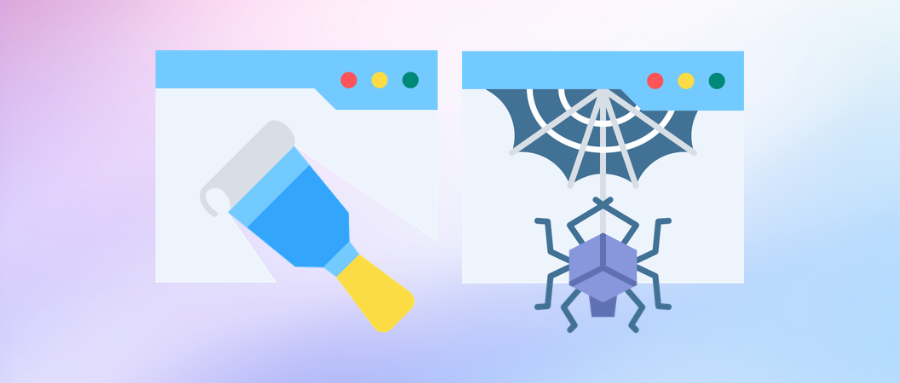
Simply put, web scraping answers “What data is on this page?”, while web crawling answers “What pages can be found?”
Different Working Methods: Page Parsing vs Link Following
Web scraping and web crawling follow different paths.
Web scraping focuses on target pages. Programs analyze page structures, locate required fields, and extract specific information.
Web crawling focuses on relationships between pages. Crawlers extract links from one page and continue visiting new pages to expand coverage.
For a website containing homepages, category pages, and product pages, web crawling focuses on how these pages connect, while web scraping focuses on what data exists on each page.
Different Data Scope: Targeted Data Collection vs Web Discovery
Web scraping usually works with clear data sources. Users already know which websites or pages they need to access and want to collect specific information from them.
Web crawling deals with a broader data scope. Since all target pages may not be known in advance, crawlers need to discover new pages during the process.
However, data volume is not the main factor. The key is whether the target pages and data sources are clearly defined.
Different Outputs: Structured Data vs Web Resources
Web scraping usually produces structured data, such as prices, product details, and review lists, which can be stored, analyzed, and used directly.
Web crawling mainly produces web resource information, including URLs, page relationships, and website structures. These results can support search indexing, website analysis, or further data processing.
Different Use Cases: Data Collection vs Web Resource Discovery
Web scraping is suitable for tasks such as price monitoring, competitor analysis, product information collection, and review analysis. These tasks usually have clear pages and specific data fields.
Web crawling is more suitable for discovering large numbers of web resources. Search engines, website structure analysis, and content discovery all rely on crawling to expand web coverage.
In real projects, web scraping and web crawling are not always used separately. Some large-scale data collection tasks require both page discovery and data extraction.
Web Scraping or Web Crawling: Which One Should You Choose?
There is no absolute better choice between web scraping and web crawling. The right method depends on your data collection goals.
Some people assume that larger data volumes require web crawling, but this is not always true. The key questions are whether the target pages are known and whether the task focuses on extracting information or discovering new pages.
Known Target Pages and Specific Data: Choose Web Scraping
When the target websites, pages, and required data fields are already clear, web scraping is usually the better choice.
For example, businesses may monitor product changes across competitor websites. Even if the amount of collected data is large, the goal is still to extract information from fixed pages rather than discover new ones.
Web scraping is suitable when:
- Target websites or pages are already known
- Specific data fields are required
- Web content needs to be converted into structured data
Discovering Unknown Pages: Choose Web Crawling
When the goal is to discover more web resources instead of extracting data from specific pages, web crawling is more suitable.
Typical characteristics include:
- Target pages cannot be fully identified in advance
- Wider web coverage is needed
- The main goal is discovering more data sources
Large-Scale Data Collection: Choose Based on the Goal
Data volume alone does not determine whether you need web scraping or web crawling. If websites, pages, and data fields are already defined, large-scale collection is still a web scraping task.
Large-Scale Collection from Fixed Pages: Web Scraping
For example, monitoring product prices across multiple websites every day may generate a large amount of data. However, if the target pages and fields remain fixed, the core task is still web scraping.
Large-Scale Web Discovery: Web Crawling
If the goal is to build an industry website database, collect unknown resources, or continuously discover new pages, web crawling is more suitable.
How Do Web Scraping and Web Crawling Work Together?
Web scraping and web crawling solve different problems, but they can work together in complex data collection projects.
For example, a company may need to collect product information from multiple websites. Web crawling can first discover relevant product pages, and web scraping can then extract product names, prices, inventory, and other specific fields from those pages.
This approach is suitable for projects where the target pages are large in number but not completely known in advance. Combining both methods can reduce manual page discovery and improve data extraction efficiency.
However, not every project requires both methods. If target pages are already known, web scraping may be enough. If the main goal is finding more pages, web crawling alone may be sufficient.
How to Choose Between Web Scraping and Web Crawling?
Consider these three questions:
Are the Target Pages Already Known?
Known pages with specific information needs → choose web scraping.
Need to discover new pages through links → choose web crawling.
Is the Goal Data Extraction or Page Discovery?
Need prices, inventory, product details, or reviews → web scraping.
Need broader web coverage and new resources → web crawling.
Do You Need Both Page Discovery and Data Extraction?
When a project requires discovering new pages and extracting specific information, web scraping and web crawling can be combined.
| Requirement | Recommended Method |
| Extract information from specific pages | Web scraping |
| Monitor product prices and information changes | Web scraping |
| Collect unknown web resources | Web crawling |
| Build web indexes | Web crawling |
| Analyze website structures | Web crawling |
| Discover pages and extract data together | Combination of both |
The key to choosing between web scraping and web crawling is not data volume, but whether your task is extracting data from existing pages or discovering more web resources.
After choosing the right method, practical factors such as access stability and regional coverage should also be considered. For projects requiring data collection from websites in different regions, suitable IP resources can help match different market requirements. NovProxy provides multi-region residential IP resources for different data collection scenarios.
Frequently Asked Questions
Can web scraping handle dynamic websites?
Yes. Dynamic websites often load data through JavaScript, which may not appear in the initial HTML. Browser automation tools can help process these pages, but they usually require more resources.
What is the difference between web scraping and API data collection?
APIs provide structured data through predefined interfaces, while web scraping extracts information from HTML pages. APIs are usually more efficient when available, but scraping can be useful when suitable APIs are unavailable.
Can web scraping affect website performance?
It can. Sending too many requests in a short period may increase server load. Proper request frequency and collection limits should be considered during data collection.
What technologies are used for web scraping?
Common technologies include HTML parsing, CSS selectors, XPath, JavaScript handling, and browser automation. The choice depends on page structure, data type, and project scale.
Conclusion
Web scraping and web crawling are often discussed together, but they focus on different tasks. Web scraping extracts useful information from existing pages, while web crawling discovers more web resources through links.
In real data collection projects, the right choice depends on your goals and whether the target pages are clearly defined. When pages are known, improving extraction accuracy is the priority. When discovering new pages is the main goal, expanding coverage becomes more important.
By understanding your data needs first and selecting the right approach, you can build a more practical collection workflow and avoid unnecessary complexity.
NovProxy provides multi-region residential IP resources to support different data collection scenarios.
Email: support@novproxy.com | Discount Code: VYJLpnEUQG